Winter storage is a necessary evil for many RV owners — but bringing your rig back to life for spring adventures isn’t as simple as just rolling it out and hitting the road. Dewinterizing means carefully reversing winter prep so your water, propane, electrical, and mechanical systems are safe and ready. Skip a step, and you might end up with popped seals, damaged water lines, or busted appliances.
Whether you’re a first-time RV owner, a weekend warrior dusting off your rig, or a seasoned road-tripper doing spring maintenance, this guide walks you through every critical step to get your RV road-ready again.
Step 1: Start With a Full Inspection (Inside and Out)
Before you touch any systems, do a thorough walk-around and inspection.
- Exterior: Check the roof, seams, windows, doors, slide‑outs, vents — anywhere caulking or seals might have cracked. Look for signs of leaks or damage. Inspect the underbelly, storage bays, and hitch/towing gear for winter wear or pest intrusion.
- Interior: Look for water stains, mildew, soft spots in floors or walls, and signs of rodents. Unearthed issues now are cheaper to fix before you re-pressurize systems.
For a detailed checklist, America’s RV Warranty provides a solid walkthrough you can follow.
Step 2: Flush the Antifreeze from the Plumbing
If you used RV-safe antifreeze, now it’s time to clear the system.
- Connect a potable water hose to your city-water inlet or fill the fresh tank and use the onboard pump.
- Open every water outlet — faucets (hot and cold), shower, toilet, and exterior spray ports — and let them run until the water is clear.
- Don’t forget appliances like washing machines or icemakers. Dump the diluted antifreeze at an approved site.
For a visual guide, check out this DIY tutorial on dewinterizing RV plumbing.
Step 3: Sanitize the Fresh Water System
Now that the antifreeze is gone, you’ll want to sanitize the system to ensure clean, safe drinking water.
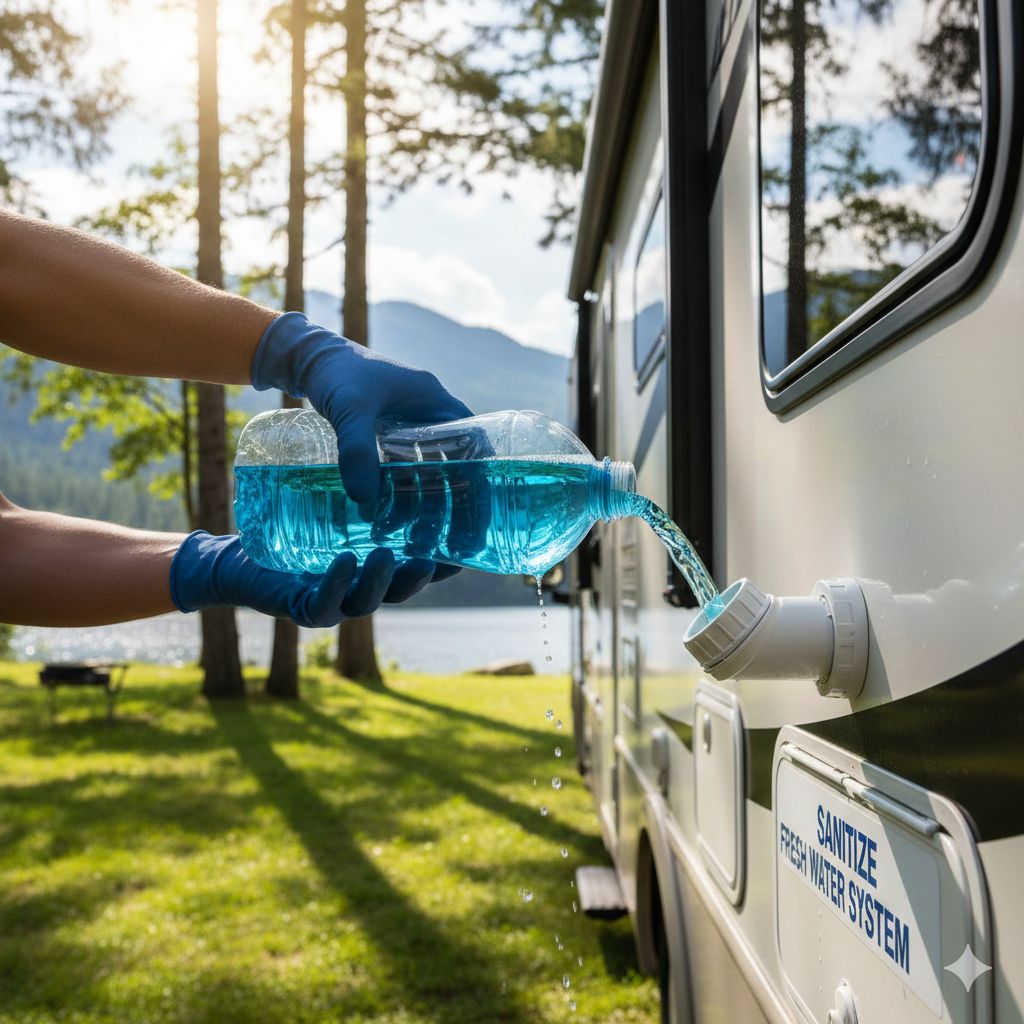
- Use about ¼ cup of household bleach per 15 gallons of fresh-tank capacity. Dilute it with water and pour it into the tank.
- Fill the tank with potable water, run the pump, and open each faucet until you smell bleach.
- Let the solution sit for at least 4–6 hours, then drain. Refill the tank and flush the system with clean water until the bleach odor is gone.
Follow RV LIFE’s sanitizing guide for safe bleach ratios and extra tips.
Step 4: Take the Water Heater Out of “Winter Mode”
Many RVers bypass or drain the water heater in winter — now’s the time to reset it:
- If bypassed, return the valves to the normal flow position.
- Make sure the tank is completely full before turning on the heater to avoid damaging the heating element.
- Inspect or replace the anode rod if it’s heavily corroded.
- Reinstall the drain plug if removed.
This step is covered in depth in RV LIFE’s water heater dewinterizing guide.
Step 5: Inspect and Test the Propane (LP) System
Don’t take chances with propane leaks.
- Check propane cylinders or tanks for rust, dents, or expired certifications.
- Inspect hoses and pigtails for wear or cracks.
- Open valves slowly and test appliances like the stove to purge air from the lines.
For peace of mind, schedule a professional leak and pressure test. More details are available in Camping World’s spring checklist.
Step 6: Check the Batteries and Electrical System
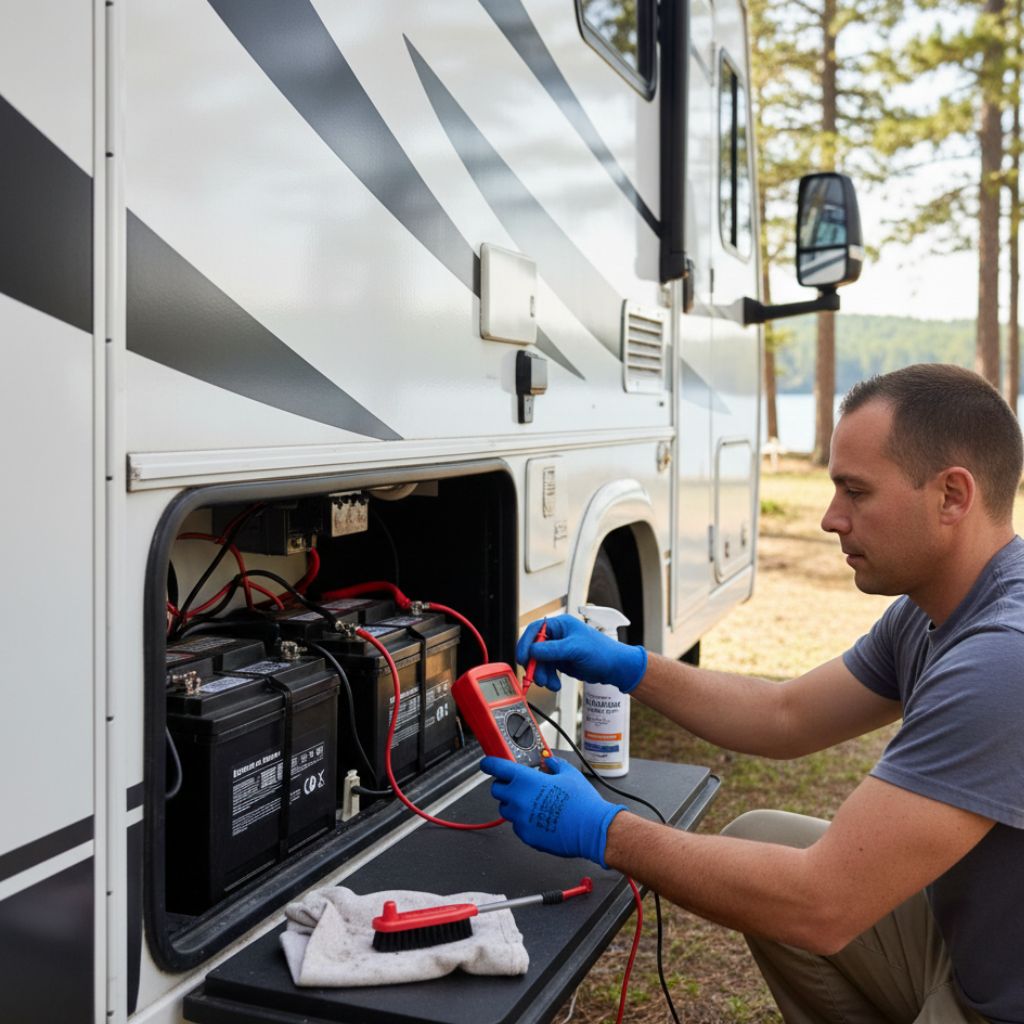
Stored batteries may have lost charge or developed corrosion:
- Examine the chassis and house batteries for swelling or leakage.
- Clean battery terminals, tighten all connections.
- Use a voltmeter or load tester to check charge levels and recharge if necessary.
Roadtrippers offers a helpful overview of this process, especially for newer RVers.
Step 7: Tires, Brakes, and Chassis Checks
Sitting in one spot all winter can wreak havoc on your tires and suspension.
- Inspect all tires — even the spare — for dry rot, sidewall cracks, or flat spots.
- Inflate to the RV manufacturer’s recommended PSI (check the door sticker or manual).
- Check fluids like engine oil, coolant, brake fluid, and power steering fluid.
- Test exterior lights, brake lights, and turn signals.
This Motor Sportsland spring guide has a solid breakdown of chassis prep.
Step 8: Clean, Air Out, and Test Appliances & Interior Systems
Now for the fun part — freshening up your home on wheels.
- Remove covers and open windows to air things out.
- Clean all surfaces, vacuum floors, and sanitize high-touch areas.
- Test major appliances one by one: fridge (electric and propane), furnace, water heater, microwave, A/C, and generator.
- Replace air filters and water filters if needed.
For a full walkthrough, check Camping World’s RV appliance test list.
Step 9: Final Safety and Trip‑Ready Checks
Before hitting the road, run a final round of safety inspections.
- Replace batteries in smoke detectors, CO alarms, and LP leak detectors.
- Ensure fire extinguishers are fully charged and easily accessible.
- Restock the RV with trip gear: hoses, leveling blocks, sewer gear, first-aid kit, kitchenware, and bedding.
Consider taking a shakedown trip close to home to test everything under real conditions — a great idea from America’s RV Warranty.
Confident, Supportive, Road-Ready
Dewinterizing is the first step toward a season of smooth travel, but real confidence comes from knowing every detail is covered before the miles start adding up. That’s where Ride Legal steps in. If you want to go into this season fully prepared, we’ve built resources to help you stay ahead of the unexpected.
No matter where your next trip takes you, Ride Legal is here to make sure the only thing you’re focusing on is the adventure — not the paperwork, not the problems, and definitely not the breakdowns. See you on the road — and don’t forget the marshmallows.
If you’re exploring LLC structuring, multi-state titling, or professional RV registration help, Ride Legal can handle the entire process for you — clean, compliant, and frustration-free.