Why Do Electric Vehicle Batteries Charge Slowly Past 80%?
08/28/2026 · Ride Legal
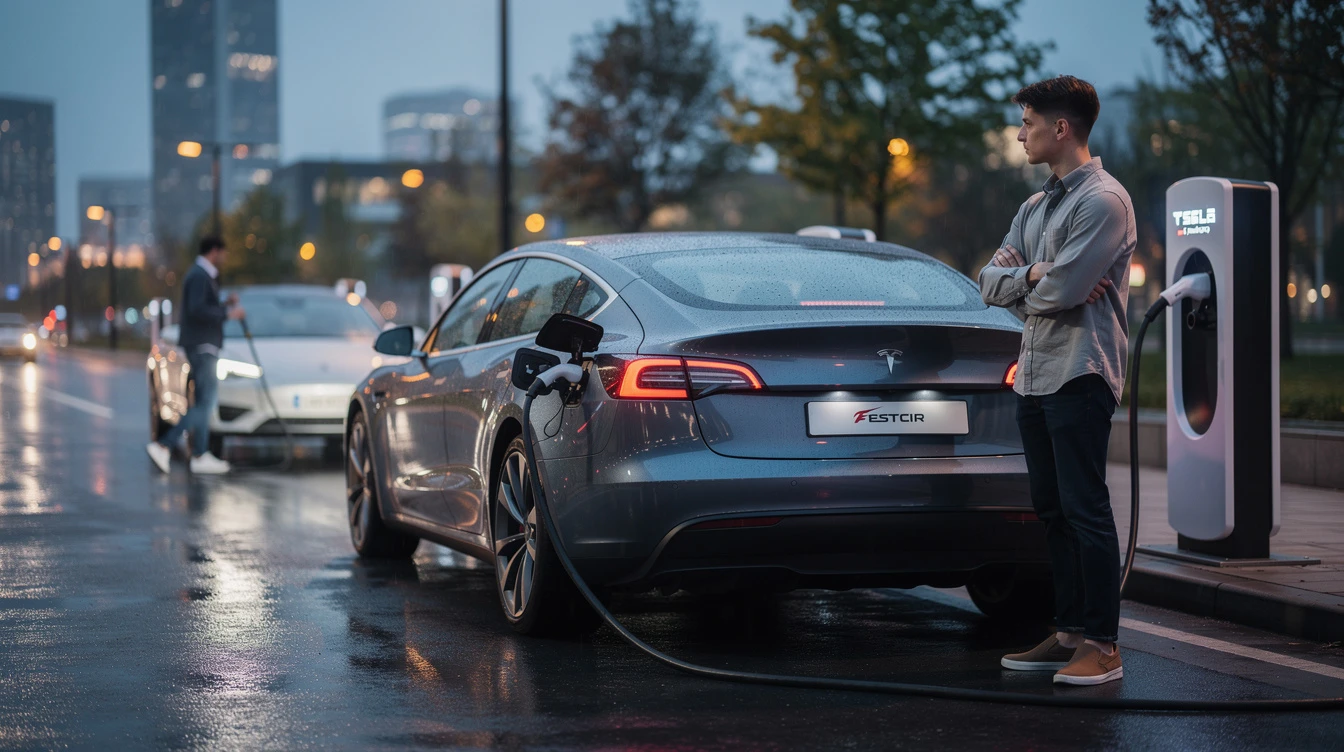
Electric vehicle batteries charge slowly past 80 percent because of a protective mechanism known as thermal throttling, which prevents chemical degradation by reducing the influx of ions as the battery nears maximum capacity. As the battery fills, the internal resistance rises, requiring the charging system to taper off the current to maintain stability and prevent heat damage to the lithium-ion cells.
The Physics of Lithium-Ion Charging and Battery Tapering
Understanding the charging curve is essential for any owner of a high-performance EV. The chemistry inside these cells requires a carefully balanced flow of lithium ions from the cathode to the anode. When a battery is nearly empty, it can accept a massive amount of energy quickly because the electrochemical potential is low and there is ample physical space for ions to settle. As the state of charge increases, that space becomes occupied, making it harder for incoming ions to find a home without risking damaging internal structures.
Why Charging Speeds Drop off at High States of Charge
At low charge levels, your vehicle can use peak power from a DC efficient charger. Once you pass that 80 percent threshold, the battery management system (BMS) intentionally slows the flow. Think of it like filling a cup of water; it is simplified to pour quickly at first, but you must slow down the stream as you approach the brim to avoid spilling. In this case, the 'spill' is permanent heat damage to the battery's crystalline structure.
Thermal Management and Battery Longevity
Heat is the primary enemy of lithium-ion technology. Rapid charging generates significant internal heat, and at high charge states, the battery’s ability to dissipate this energy decreases. To make sure the long-term health of your vehicle's energy storage, the BMS strictly controls the voltage and amperage. This protects the anode from 'lithium plating,' a process where lithium ions deposit as metallic solid layers instead of entering the electrode, which permanently reduces capacity.
Vehicle Ownership Insights and Charging Best Practices
Managing an electric vehicle requires a shift in how you view 'fueling up.' While gas-powered vehicles reward filling to the top, EVs are designed for efficiency in the middle range. If you are preparing for a long trip or managing a fleet, understanding these charging behaviors helps in maintaining asset value and operational efficiency. We have completed over 5,000 customer orders to date, and many owners of high-end electric assets consult with us on how to manage their registration and tax requirements while focusing on vehicle longevity Dirt Legal has completed over 5,000 customer orders to date (internal data, rolling, n=5,901).
Ready to register your vehicle?
Join thousands of vehicle owners who use Ride Legal to handle their registration quickly.
Start Your Bespoke Registration →
Optimizing Your Charging Routine
For daily driving, charging to 100 percent is rarely necessary and may accelerate degradation. Most manufacturers recommend capping your daily charge at 80 or 90 percent. This creates a buffer that allows the battery to operate within its most stable voltage range. If you are interested in protecting your exotic or high-value vehicle assets, look at our VIP Ownership solutions, where we help you work through the registration process for your high-performance machines.
Comparison of Charging Behaviors Across Battery Technologies
Not all battery management systems perform identically. Some manufacturers prioritize raw speed, while others focus on cycle life longevity through more conservative charging curves. Below is a breakdown of how common EV charging stages impact your time on the road.
| Charge Level | Charging Speed | Battery Stress Level |
|---|---|---|
| 0% to 20% | Highest (Peak) | Low |
| 20% to 80% | Moderate to High | Medium |
| 80% to 100% | Very Low (Trickle) | High |
See How We Can Help With Your Vehicle Registration →
Compliance and Registration for High-Value Assets
Many owners of electric vehicles often confuse registration requirements, especially when dealing with high-value imports or modified machines. Just as battery physics dictate how you charge, regional regulations dictate how you maintain your title and registration. For those interested in how we manage paperwork, more details are available in our guide on Montana Exotic Car Registration: No Sales Tax, Simple Process. Ensuring your documentation is correct prevents the common pitfalls we see, such as those related to Odometer compliance, which is the most frequent reason documents come back for correction The most frequent reason documents come back for correction is Odometer compliance (internal data, rolling last 90 days, n=33).
Registration and Titling for Modern Enthusiasts
Whether you own a high-performance EV or a classic motorcycle, the goal remains the same: spend less time on paperwork and more time on the road. If you are struggling with a title, we provide remote paperwork support for street-legal registration and title transfers.
Frequently Asked Questions About EV Charging
Why does my EV charge slower at public stations?
Public stations share power across multiple chargers. When other vehicles plug in, the station reduces the output to each car, which is separate from the physical battery's internal tendency to slow down once you pass the 80 percent mark. Always look for stations with higher individual power ratings.
Is it bad to charge my EV to 100 percent?
It is not necessarily 'bad,' but it is not ideal for the long term. Lithium-ion batteries stay healthiest at a middle state of charge. If you only charge to 100 percent right before a long trip, the impact is minimal. Constant 100 percent charging can cause accelerated capacity loss over several years.
Does cold weather affect charging speed?
Yes, cold weather significantly increases battery resistance. If the battery cells are too cold, the system will limit the charging rate to prevent internal damage. Many EVs will 'precondition' the battery while you are driving toward a charger to warm it up to optimal temperatures.
What happens if I unplug my EV at 85 percent?
Nothing happens except that you have slightly less range than at 100 percent. There is no requirement to reach 100 percent for the battery to be 'full' or functional. Stopping at 80 or 85 percent is actually better for the longevity of your battery cells.
Can I damage my battery by using DC efficient charging?
Modern EVs have advanced thermal management systems to mitigate this. While frequent use of high-speed DC chargers can contribute to faster degradation compared to Level 2 home charging, it is rarely a problem during the normal lifespan of a vehicle. Your car is designed to handle these efficient charges safely.
Start Your Bespoke Registration, No Hidden Fees
Understanding why your battery charging slows down past 80 percent is a simple lesson in chemistry and safety. By respecting these limits, you make sure your high-value electric asset remains efficient for years to come. If you need assistance with your next registration, title transfer, or out-of-state compliance, our team is here to provide the remote paperwork support you need.
This is not legal or financial advice. Please consult your CPA/Attorney for all legal and financial guidance. Ride Legal is a privately owned website and is not operated by any government agency.